


Connecting clinical care and advocacy
Dear Colleagues,
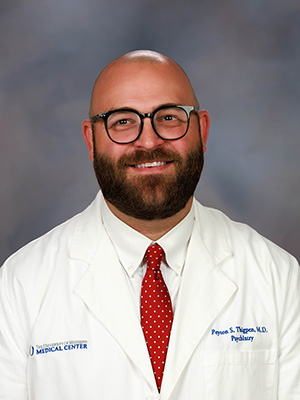
I am honored to share that I have been appointed to the Mississippi Autism Advisory Committee (MAAC), where I will serve as the representative from the University of Mississippi Medical Center.
First, I want to thank Dr. Kelsey Walker, who is stepping down from the Committee. Dr. Walker previously chaired the group and gave it steady, thoughtful leadership. I am grateful for her service to Mississippi families, and for the foundation she leaves behind. I hope to carry that work forward.
The Legislature created the MAAC through House Bill 1125 in 2011. Lawmakers recognized an urgent need for better strategies to identify, treat, educate, accommodate, and employ people with autism spectrum disorder (ASD), and to support their families. The Committee works under the Mississippi Department of Mental Health. It is comprised of parents, representatives from private industry, the state department of education, teachers and special educators, psychologists, advocates, speech therapists, etc., who are appointed by leaders of various organizations and state officials. Each year it must report to the Legislature on what it has learned and what it recommends.
Those annual reports have set out consistent priorities. The Committee has urged lawmakers to require annual in-service training on ASD and evidence-based interventions in every public school district. It has also repeatedly recommended an Office of Autism Services to coordinate efforts among the state agencies that serve children and adults with ASD. Services today are scattered and uneven from one part of the state to the next, and families often bear the burden of navigating them. The Committee’s work has also tracked progress, including the state’s autism insurance coverage requirement, expanded Medicaid coverage for autism services, and Medicaid waiver renewals.
This work matters to me as a child and adolescent psychiatrist. Many of the children and families I see are trying to get an accurate diagnosis, find timely intervention, and coordinate care among clinicians, schools, and agencies. ASD frequently occurs alongside other psychiatric and developmental conditions, so the clinical perspective of our field belongs in these policy conversations. I hope to bring what I see in practice, including the barriers families face, the gaps in access, and the importance of early identification, to the Committee’s recommendations.
I am eager to hear from my colleagues. If you have observations from your clinical, teaching, or research work that could inform the Committee, or if you would simply like to know more about its work, please reach out to me. Mississippi’s children and adults with autism, and their families, deserve a coordinated system of support, and I am excited to help move that effort forward.
With gratitude and respect,
Peyton Thigpen, MD